Hanoi or Ho Chi Minh City: two markets at different points of the same cycle
Tu Anh Nguyen (Ann) · 26 October 2026 · 3 min read
Vietnam is often discussed as one market. Its two largest cities are currently at noticeably different points in the same cycle, and the difference is large enough to change an allocation decision.
| Hanoi | Ho Chi Minh City | |
|---|---|---|
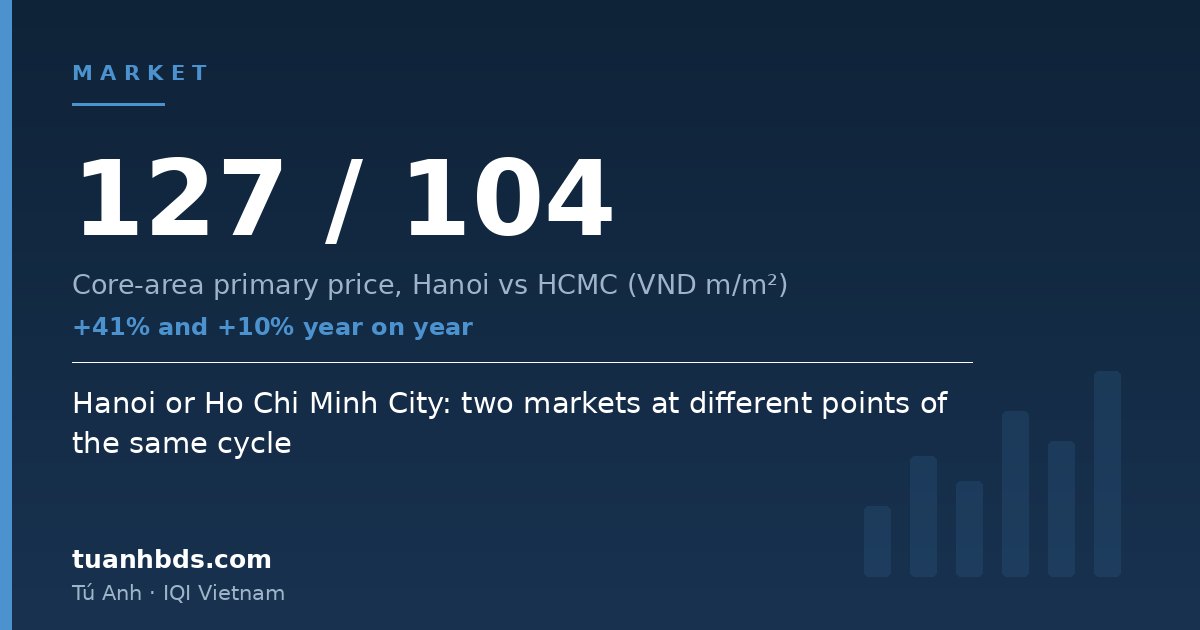
| Core-area primary price | ~VND 127m/m², +6% q/q, +41% y/y | ~VND 104m/m², +1% q/q, +10% y/y |
| Secondary price | ~VND 60m/m², −5% q/q, −8% y/y | ~VND 60m/m², −4% q/q, flat y/y |
| Secondary correction | third consecutive quarter | just started |
| Nine-month absorption | 67% | 43% |
| New supply | ~6,200 units, −40% y/y | 3,267 units, −53% y/y |
| Transactions | ~3,900, −66% y/y | — |
Hanoi: ran further, correcting earlier
Hanoi's core area rose about 41% year on year — a very large move for twelve months.
The adjustment began early. Secondary prices have declined since Q1 2026, three consecutive quarters, reaching around VND 60 million per square metre, about 8% below the previous year.
Transactions fell 66% year on year, a steeper decline than the 40% fall in new supply. The difference between those two figures is accumulating unsold inventory.
The structural problem is affordability of stock, not price level. Grade C apartments are down to about 4% of primary supply, having fallen an average of 27% a year since 2022, and are projected at around 12% of future supply. The consequence shows in the transaction mix: more than 70% of units sold in the quarter were priced above VND 6 billion.
Savills also records a notable spread between primary and secondary pricing in Hanoi — about 28% for Grade A and 17% for Grade B. That spread is a direct input into the buy-new-or-buy-resale decision.
Ho Chi Minh City: rose less, weaker liquidity
The central area rose a more moderate 10% year on year, and secondary prices only began adjusting in Q3, down about 4%.
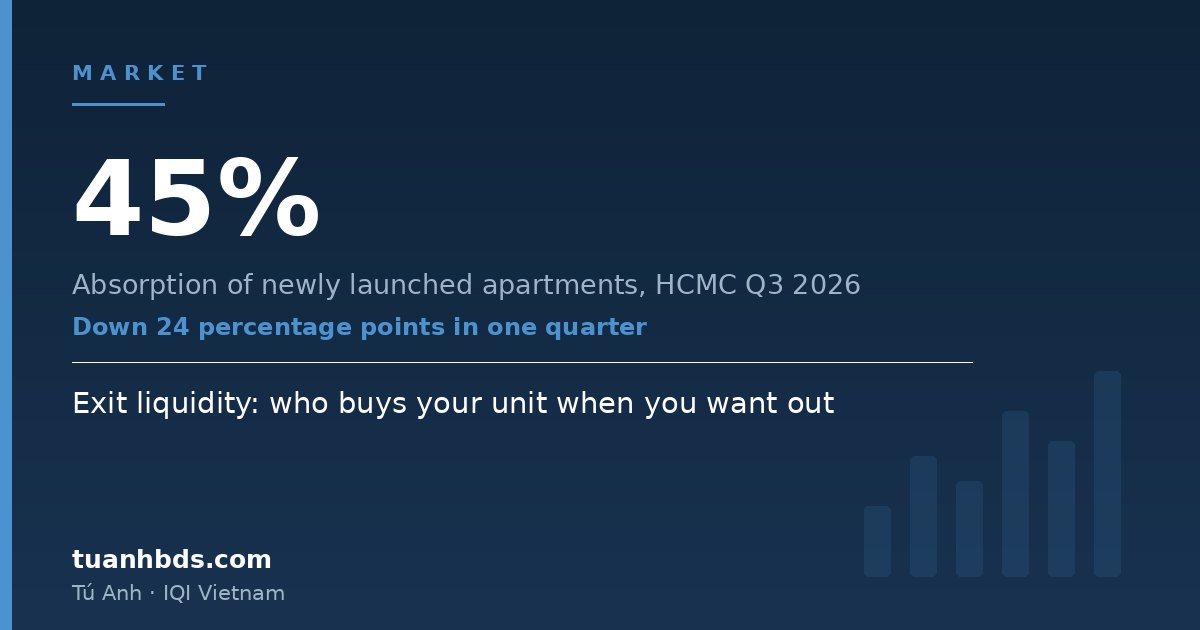
But liquidity is materially weaker: nine-month absorption of 43% against Hanoi's 67%.
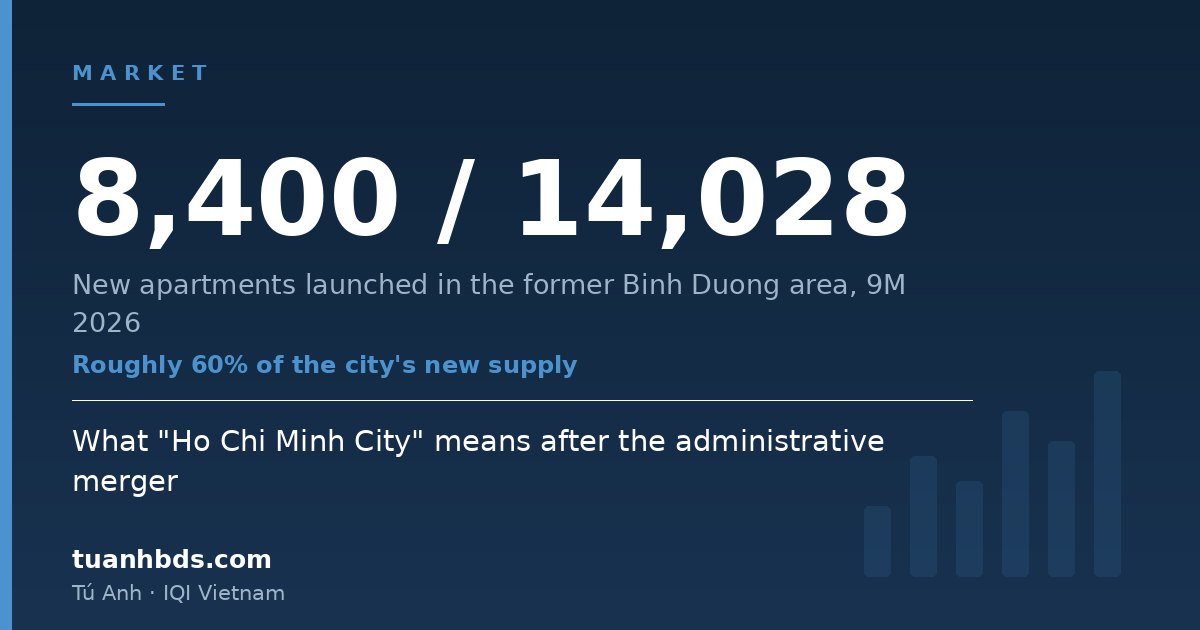
The structural problem is geographic. After the administrative merger, more than 8,400 of the 14,028 apartments launched in the first nine months were in the former Binh Duong area. City-wide averages now blend two different markets, and buyers in the historic core have very little new stock to choose from.
Reading the cycle
A rough positioning, held loosely:
- Hanoi is further through an adjustment, from a higher base, with better liquidity and a visible shortage of mid-priced stock
- Ho Chi Minh City is earlier in its adjustment, from a lower base, with weaker liquidity and supply dispersing outward
Neither is categorically better. The relevant question is which risk you would rather hold: Hanoi's higher entry price with an adjustment already partly delivered, or Ho Chi Minh City's lower entry with more of the adjustment potentially ahead.
Both cities now publish city-wide averages that blend very different sub-markets — Ho Chi Minh City because of the merger, Hanoi because large suburban developments made up roughly 40% of new supply over nine months. Compare core with core, grade with grade, or the comparison tells you nothing.
The question most foreign buyers skip
Not which city has better fundamentals but:
Which city can you actually monitor?
Owning property remotely in a market where you do not live means depending on someone else to notice when building management declines, when the tower fills with competing rental listings, when a neighbouring project launches at a lower price.
A few percentage points of expected return rarely compensates for being the last person to learn something about your own asset. For most foreign investors, the practical answer is: buy where you spend time, or where you have someone whose judgement you trust watching it.
A note on the north–south difference
Beyond the numbers, the two cities differ in buyer behaviour, product preferences and rental demand composition. Expatriate rental demand, international schooling and the profile of corporate tenants are not distributed evenly between them.
If your plan depends on letting the unit, that difference matters more than the headline price gap — and it is the part that cannot be assessed from a spreadsheet.
Frequently asked questions
Which city has higher apartment prices?
It depends on the comparison. In Q3 2026 the core area of Hanoi averaged around VND 127 million per square metre, above central Ho Chi Minh City at around VND 104 million. City-wide averages differ because Ho Chi Minh City now includes large outer areas after the administrative merger.
Which market is correcting first?
Hanoi. Secondary prices there have fallen for three consecutive quarters, beginning in Q1 2026, and were down about 8% year on year in Q3. Ho Chi Minh City secondary prices only began easing in Q3, down about 4% in the quarter.
Which has better liquidity?
Hanoi, relatively. Nine-month absorption against total existing primary supply was 67% in Hanoi against 43% in Ho Chi Minh City, although both fell by around 23 to 24 percentage points year on year.
What is each market's structural problem?
Hanoi lacks affordable stock: Grade C fell to about 4% of primary supply, having declined an average 27% a year since 2022. Ho Chi Minh City's issue is geographic, with supply shifting outside the historic core after the merger.
Which should a foreign investor choose?
The one you can monitor. Buying in a city where you do not live, cannot assess building management and have nobody watching the asset is usually a larger risk than a few percentage points of price difference.
Sources
- CBRE Vietnam — Hanoi apartment market, Q3 2026 — doanhnhan.baophapluat.vn
- CBRE Vietnam — Ho Chi Minh City housing market, Q3 2026 — diendandoanhnghiep.vn
- Savills Vietnam — Hanoi supply structure, Q3 2026 — batdongsan.baoxaydung.vn
- Comparative absorption and pricing analysis, Q3 2026 — baomoi.com
I am Tu Anh Nguyen (Ann), a real estate consultant at IQI Vietnam in Ho Chi Minh City. Before this I spent nearly eight years in Kuala Lumpur and moved home six times there — so I have been the foreigner trying to read someone else's property market, in someone else's language.
What that means in practice: I will put the awkward answers in writing. Remaining foreign quota in a specific building, the Department of Construction eligibility letter, the bank guarantee, the real walking distance to a metro station, what a unit like yours actually resold for. If a deal does not stand up, I would rather tell you before you wire a deposit.
Figures in this article come from published research and official documents, listed under Sources. This is general information for research purposes, not legal, tax or investment advice. Vietnamese property law is applied case by case — have a Vietnam-qualified lawyer review your specific transaction. Last updated: 26 October 2026.

Real estate consultant at IQI Vietnam, Ho Chi Minh City. Nearly eight years living and working in Kuala Lumpur before returning to Vietnam. Works in English and Vietnamese.
About Ann →